
Notes on Leaving Gas Behind
Panels, circuits, cookware and hoods, written for Bellevue kitchens.
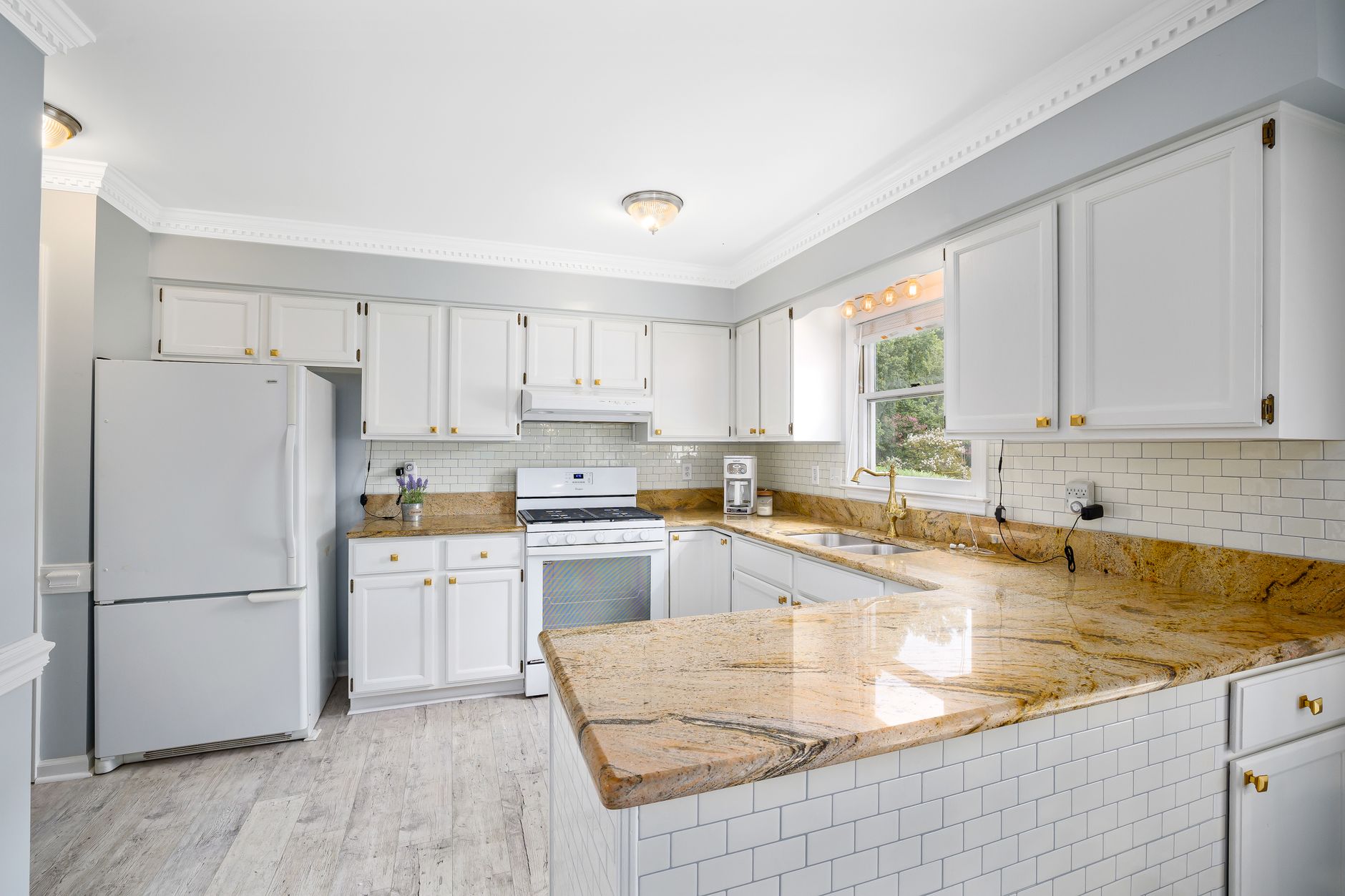
Kitchen Renovation Near Me: Choosing a Range Hood That Actually Works
Of everything that goes into a new kitchen, the range hood is the item most often chosen last, chosen on looks, and regretted first. Cabinets get weeks of attention. The thing that decides whether the house smells like last night's salmon at breakfast usually gets picked off a showroom wall in ten minutes because it matched the faucet.
That is a shame, because ventilation is the only part of a kitchen that is a system rather than an object. A hood is one component of it. The duct is another, the termination outside is another, and in a modern airtight house the path the replacement air takes into the room is another still. Get any one of them wrong and the other three cannot compensate.
It is also the part that is close to impossible to fix afterwards. A countertop can be replaced. A cabinet door can be refinished. A duct in the wrong place, at the wrong diameter, with four elbows in it, is inside a finished wall or ceiling. So this belongs in the first conversation about kitchen remodeling in bellevue rather than in the appliance order at the end, and the reason is purely practical: the duct route has to be decided before anything closes up.
A hood captures, it does not suck
The mental model most people carry is a vacuum cleaner. Turn it up, and it pulls more smoke out of the room. That is not how it behaves.
Cooking plume rises on its own. It is hot, it is buoyant, and it arrives at the ceiling whether a hood is running or not. The job of the hood is to be in the way of it: to sit above the cooking surface, hold the rising column long enough for the blower to move it into the duct, and not let it roll out around the edges. An undersized canopy running hard will still spill, because the plume is wider than the thing trying to catch it. A generous canopy on a modest blower often performs better in a real kitchen than the reverse.
Three physical dimensions matter more than the airflow number on the box.
Width. A hood the same width as the range is the bare minimum. Wider is genuinely better, by three inches on each side where the cabinet layout allows it, because the plume spreads as it rises and the front burners are the ones that spill.
Depth. A shallow hood over a deep range leaves the front burners effectively uncovered. The front of the range is where most searing and frying happens, so a hood that does not reach forward over it is working on the wrong half of the appliance.
Mounting height. Follow the manufacturer's specified range, which is usually somewhere between 24 and 36 inches above the cooking surface depending on fuel and model. Mount it higher than that for sightlines and capture falls away quickly. Mount it lower and a tall cook knocks their head into it every day, which is how hoods end up switched off permanently.
Sizing the blower without chasing the biggest number
Airflow is measured in cubic feet per minute. More is not automatically better, for three reasons that all show up after installation.
The first is noise. A blower pushing a large volume through an ordinary duct is loud, and a loud hood gets run on its lowest setting or not at all. The quietest arrangement is a remote or inline blower, mounted in the attic or on an exterior wall rather than in the canopy above your head. It costs more and it needs somewhere to live, but it changes the appliance from one you tolerate into one you actually use.
The second is make-up air, covered below, because crossing a certain exhaust rate changes the scope of the job.
The third is that the real constraint is usually the duct, not the motor. A blower rated for a high flow on a test bench produces much less through a long run with several bends and a restrictive cap on the outside. Buying a bigger motor to overcome a poor duct route mostly buys noise.
Match the hood to the cooking, not to the kitchen's square footage. A high output gas range with a griddle genuinely needs serious extraction. A standard four burner electric or induction range used for ordinary weeknight cooking does not, and induction in particular produces no combustion byproducts at all, so the only things being removed are steam, grease and smell.
The duct is the part that decides performance
Everything above is undone by a bad duct run, and this is the half that becomes invisible once drywall goes on.
Shortest practical route, largest practical diameter, fewest bends. That is close to the whole rule. Each elbow costs flow equivalent to several feet of straight pipe, so a run that doglegs around a joist twice is quietly worse than a longer straight one.
Rigid smooth wall metal duct, sized to the hood manufacturer's requirement. Never flexible corrugated duct for a range hood: the ribbed interior is both a flow restriction and a grease trap. Never reduce the diameter to squeeze between framing members, which is the most common field compromise and the one that cripples an expensive appliance.
The outside termination matters as much as the pipe. It needs a proper hood cap with a damper that opens under pressure and closes when the fan stops, and it must not be screened with fine insect mesh, which clogs with grease and chokes the system within a year.
Two climate specific details are worth naming. In an unconditioned attic, warm moist kitchen air moving through cold metal duct condenses, so insulating the run prevents water tracking back down to the hood. And a termination on a wet, weather facing elevation wants a cap designed to shed driving rain rather than the cheapest round louvre in the catalogue.
Make-up air, and why tight houses forced the issue
Older houses leaked. Pull 600 cubic feet per minute out of one and roughly the same volume seeped in around windows, doors and framing without anybody noticing.
Newer construction, including a great deal of the housing stock around Bellevue built or substantially upgraded in the last couple of decades, is sealed deliberately well. Air barriers, better windows and taped sheathing make a house comfortable and cheap to heat. They also mean a powerful exhaust fan has nowhere to draw replacement air from, so it depressurises the building instead.
That has consequences beyond a hood that underperforms. In a depressurised house, air can be pulled backwards down the flue of any naturally vented combustion appliance, which is a safety issue rather than a comfort one. It also makes doors hard to open and whistles air through every remaining gap.
The standard answer is a make-up air system: a damper and a duct that open when the hood runs and deliberately bring outside air in. Most jurisdictions require one above a threshold exhaust rate, and a figure around 400 cubic feet per minute is a common trigger point, but the number and the details are set by the adopted code and any local amendments, so confirm your specific scope with the building department rather than relying on a general article.
What to understand before choosing a hood is simply that crossing that line adds a second duct, a damper, a control interlock and, often, some way of tempering incoming winter air so the kitchen does not get a cold draught every time the fan starts. None of it is exotic. All of it is cheaper to plan than to retrofit, and it is a real argument for a moderate, well ducted, quiet hood over a very large one.
When a recirculating hood is the honest answer
Ducting outside is not always possible. In a stacked condominium, an interior unit with no exterior wall nearby, or a situation where the association will not permit a new penetration, the alternative is a recirculating hood with charcoal filters.
Be clear about what that is and is not. It filters grease, it reduces odour, and it returns the air to the room. It removes no heat, no steam and no moisture, which means the humidity and the warmth stay in the kitchen. Charcoal filters are consumables with a service life measured in months of real cooking, and a recirculating hood whose filters were last changed three years ago is a decorative light fixture.
If that is the constraint, lean into mitigation: an induction cooktop rather than gas, a bathroom or utility exhaust nearby that can run during heavy cooking, and realistic expectations about frying.
Downdrafts, over range microwaves and other compromises
A downdraft unit that rises behind the cooktop asks the fan to fight buoyancy, because the plume wants to go up while the appliance pulls it sideways and down. They work best with short items on the back burners and least well with a tall stockpot at the front.
An over range microwave combination unit is a space saving compromise and should be understood as one. The blower is small, the capture area is shallow, the unit sits high because the microwave has to be reachable, and many are installed in recirculating mode even where a duct exists. It is rarely the right call in a kitchen being rebuilt from scratch.
Getting it into the build at the right moment
Ventilation is a rough-in trade, which means it is decided early and installed in the middle.
The hood model has to be chosen before framing is closed, because the duct size, the duct location and any blocking for mounting all come from that specific appliance's installation instructions. A hood selected after drywall is a hood fitted to whatever duct happens to be there.
If the design includes a custom plaster or wood hood surround built by the cabinetmaker, the insert inside it is ordered at the same time as the cabinets, because the surround is built around its dimensions.
And the electrical for a remote blower, a make-up air damper and the interlock between them belongs in the kitchen's circuit plan, not as an afterthought once the panel work is finished.
Ask to see the ventilation shown on the plan: the hood model, the duct diameter, the route it takes, where it exits the building and what the cap looks like. A remodeler who can point at all five on a drawing has already thought about the part of the kitchen nobody photographs and everybody lives with.
Published
Before You Order an Induction Range in Bellevue: The Panel, the Circuit and the Hood
There is a particular phone call we get often enough that it has become a pattern. A new induction range has been delivered. It is sitting in the garage, still strapped to its pallet, because the delivery crew looked behind the old gas range, found a gas valve and a single 120 volt outlet, and left. Nobody had checked whether the house could power the thing.
Sometimes the fix is a single afternoon of electrical work. Sometimes it is a service upgrade that needs the utility, a permit and several weeks of scheduling. The difference is almost entirely decided by what is inside your electrical panel, and you can learn a surprising amount about it yourself before you spend a dollar on an appliance.
This is the order we would suggest for anyone in Bellevue thinking about leaving gas cooking behind.
Start by Reading the Label on Your Panel
Open the door of your main electrical panel. On the inside of the door, or on the panel itself, there is a label. Look for two numbers.
The first is the rating of the main breaker, usually the largest breaker at the top of the panel, often marked 100, 125, 150 or 200. That number is roughly the size of your electrical service. The second is the bus rating on the label, which tells you the maximum the panel itself is built to carry.
Take a photo of the label and a photo of the whole panel with every breaker visible. Those two pictures are the most useful thing you can bring to any electrician or contractor, and they take thirty seconds.
A lot of the 1950s and 1960s ramblers in Lake Hills, Crossroads, Newport Hills and Eastgate were built with 100 amp service, and many of them still have it. The larger homes built from the 1970s through the 1990s in Somerset, Woodridge and Bridle Trails more often have 150 or 200 amps. Neither is a rule. Plenty of older houses have been upgraded, and plenty of newer ones are carrying loads nobody imagined when they were wired.
Why Counting Empty Breaker Slots Does Not Tell You Much
The instinct is to look for empty spaces in the panel. If there is room for a new two pole breaker, surely the range will fit.
Space and capacity are different things. A panel can have empty slots and already be close to the limit of the service feeding it. Another panel can be completely full and still have plenty of spare capacity, with the space problem solved by tandem breakers or a small subpanel where the panel allows it.
What actually answers the question is a load calculation. The electrical code sets out a method for adding up what a house can reasonably be expected to draw. It counts the square footage for lighting and general receptacles, the kitchen and laundry circuits, and then the big fixed appliances: the furnace or heat pump, the water heater, the dryer, the cooking equipment and, increasingly, an EV charger. The method applies demand factors, because not everything runs at full power at the same moment, and produces a figure to compare against the service size.
This is where gas houses surprise people. If your furnace, water heater and dryer all run on gas, your electrical load may be quite low, and a new range circuit fits easily. If you have already switched the furnace to a heat pump, installed an electric water heater and put a charger in the garage, that same 100 amp service may already be spoken for.
The Three Answers a Load Calculation Gives
Once the numbers are in, the answer is one of three things.
It fits as it is
There is enough capacity and a place to install a 40 or 50 amp two pole breaker. The work is a new circuit from the panel to the range location, a receptacle or hardwired connection, a permit and an inspection. This is the simplest and least expensive outcome, and in homes with 200 amp service and gas heat it is the most common one.
It fits with load management
The service is close but not quite there. Rather than upgrading the whole service, a load management device can be installed that monitors the total draw and briefly pauses a large load, such as an EV charger or a dryer, when the range is running hard. The electrical code recognizes these systems as a way to stay within the service rating. For a household that does not usually cook dinner while the car is charging and the dryer is running, the pause is rarely noticed. It is often the difference between a job measured in days and one measured in weeks.
It needs more service
The numbers do not work, or the panel should be replaced regardless. A service upgrade means a larger service from the utility, a new meter base in many cases, a new main panel and sometimes new service entrance conductors. It involves a permit through the City of Bellevue, an inspection, and coordination with the utility to disconnect and reconnect power. Expect it to take longer to schedule than to do. In Bellevue it typically runs somewhere between $5,000 and $12,000, and the range is wide because the distance from the meter, whether the service is overhead or underground, and the condition of the existing equipment all move it.
Older Panels and Wiring Worth Looking For
While the panel is open, a few things are worth checking in mid-century houses.
Some panel brands from the 1950s through the 1980s have a reputation for breakers that do not trip reliably, and insurers and home inspectors sometimes flag them. If your panel is one of these, many electricians will recommend replacing it before adding a large new load, and it is reasonable to fold that into the conversion.
Houses built or added onto in the late 1960s and early 1970s sometimes have aluminum branch wiring. You can occasionally spot it where cables enter the panel, with a silver colored conductor or the word aluminum printed on the cable jacket. It does not prevent a conversion, but connections on aluminum circuits need specific devices and care, and it is better to know than to find out halfway through a kitchen.
Finally, look at the kitchen circuits themselves. Older kitchens frequently have two or three receptacles on a single shared circuit, no GFCI protection at the counter, and no dedicated circuit for the dishwasher or microwave. If the walls are going to be open for the range circuit anyway, it costs much less to bring those up to current requirements at the same time than to come back later.
Match the Circuit to the Model, Not to a Rule of Thumb
Most full size induction ranges want a dedicated 240 volt circuit of 40 or 50 amps. Many cooktops call for 30 or 40 amps. Those are typical figures, not answers. The installation instructions for your specific model state the required breaker size and wire gauge, whether it ships with a cord or expects to be hardwired, and where the receptacle or junction box has to sit behind the appliance so it does not block the unit from sliding back.
That is why we ask for the model number before sizing anything. Buying the circuit before the appliance can mean running 40 amp wire for a range that wants 50, and pulling it out again.
If a new 240 volt circuit is genuinely impractical, for example in a condo with a small unit panel and no path for new wire, a small number of induction ranges now run from an ordinary 120 volt outlet using a built-in battery to reach full power. They cost more to buy and they are a narrow category, but they exist, and in the right building they solve a real problem.
The Gas Side of the Job
Taking out a gas range is not the same as unplugging it. The flexible connector comes off, and the line is capped at the correct fitting by a licensed gas fitter, then pressure tested so the rest of the piping in the house is confirmed tight. That work is permitted and inspected like the electrical.
If the range was the last gas appliance in the house, it is worth asking the gas utility about removing the meter, because a gas account often carries a monthly service charge even when nothing is burning. If a furnace, fireplace insert or water heater still uses gas, the supply stays live to those, and nothing changes except the capped branch in the kitchen.
Rethink the Hood While the Wall Is Open
People often assume that giving up gas means giving up the hood. It is closer to the opposite. The combustion byproducts from a gas flame are gone, which is a real improvement for indoor air, but cooking still produces grease, smoke and water vapor. Induction also boils water very quickly, and a lot of steam comes off a pot in a hurry.
In Bellevue, where windows stay shut for most of the wet season, that moisture has to be carried out of the house. A recirculating hood catches some grease and puts all of the moisture back in the room, where it ends up on cold exterior walls and inside upper cabinets. A hood ducted to the outside, sized to cover the whole cooktop and not only the back burners, is what actually keeps the kitchen dry.
Keep the fan size sensible. Residential mechanical codes generally require make-up air once a kitchen exhaust is rated above 400 CFM, and adding a make-up air system is a meaningful extra cost. For a typical 30 or 36 inch induction cooktop against a wall, a well shaped hood at or under that figure, on a short run of smooth metal duct with few elbows and a backdraft damper at the exterior cap, does the job well.
Cookware, Habits and One Health Question
Before you budget for new pots, hold a fridge magnet against the bottom of the ones you own. If it sticks firmly, the pan will work on induction. Cast iron and most stainless steel pass. Aluminum, copper and glass fail unless they have a magnetic base plate.
Expect to adjust to the speed. Induction heats far faster than most gas burners, and it drops heat almost instantly when you turn it down. Most people like that within a week. Some people with pacemakers or other implanted medical devices are advised to keep a distance from an active induction zone, so if that applies in your household, ask your doctor before you choose.
Condos Downtown Have Their Own Rules
In the high-rise buildings downtown, the unit is only part of the question. Building management usually controls work hours, noise, and when the freight elevator can be booked for a delivery or debris removal. Many buildings prohibit new penetrations in the exterior wall, which can rule out a ducted hood entirely. The unit panel may be small, and adding capacity may require the building’s approval or not be possible at all.
Read the building rules before you shop, and ask management what has been approved in other units. That is often faster than any other research.
The Order the Work Should Happen In
When the conversion is part of a larger remodel, sequence matters.
- Load calculation and appliance choice, with the model numbers in hand.
- Permits for electrical, gas and ducting work.
- Service upgrade or load management device, if needed.
- Demolition of anything being removed, then gas capping.
- Rough-in of the range circuit, any other kitchen circuits and the hood duct, followed by the rough inspection before walls close.
- Drywall patching, cabinet modifications and counter changes for the new cooktop or range opening.
- Hood installation, appliance connection and the final inspection.
For a conversion that is only a circuit, gas capping and a hood, the kitchen is often usable again within a few days. When a service upgrade or cabinet work is involved, plan for longer and set up a temporary cooking spot with a countertop induction burner, a microwave and a sink nearby. A single plug-in induction burner is also an inexpensive way to find out whether you like cooking on induction before committing to a full range.
Where to Spend and Where Not To
Spend on the load calculation, on a properly sized and permitted circuit, and on a hood that is ducted outside. Those are the parts that are expensive to redo.
Do not assume you need a service upgrade until the numbers say so. Do not buy the largest hood on the showroom wall if it pushes you into make-up air you did not need. And do not tear out sound cabinets just because the new range is a slide-in, when trimming the counter and adding a filler usually handles it.
If you are in Bellevue and considering the switch, call (425) 663-9860 and send us the two panel photos and the range model you are looking at. We can usually tell you which of the three answers you are facing before anyone visits.
Published
Bellevue Houses We Most Often Convert
Mid-century ramblers with small panels, larger 1970s to 1990s homes with long hood duct runs, and downtown condos with building rules to work around.
Call (425) 663-9860. A clear photo of your electrical panel with the door open, and the label inside the door, lets us tell you a lot before we visit.
- Bellevue, WA (98004, 98005, 98006, 98007, 98008)
- Lake Hills and Crossroads
- Newport Hills and Eastgate
- Somerset and Woodridge
- Bridle Trails
- Downtown Bellevue high-rise condos
Kenandersonfoundation remodels kitchens in Bellevue with one job at the center of most of our work right now: taking a kitchen off gas and putting it on induction. That means a load calculation on your electrical panel, a dedicated 240 volt range circuit, a capped and tested gas stub, a range hood that actually vents to the outside, and whatever cabinet and countertop changes the new appliance layout needs. We plan the electrical and ventilation first, because they decide what the rest of the kitchen can be.
The problem we see most often is a homeowner who bought the range before anybody looked at the panel. A lot of the 1950s and 1960s ramblers and split-levels in Lake Hills, Crossroads, Newport Hills and Eastgate still run on 100 amp service, and some of them have a gas furnace and gas water heater that were never counted against the electrical side because they never had to be. An induction range usually wants a 40 or 50 amp circuit of its own. On a small panel with an electric dryer, a heat pump or an EV charger already on it, that circuit may not fit without a load calculation, a load management device or a service upgrade. Finding that out after delivery means a range sitting in the garage for weeks.
Ventilation is the other half. Induction does not burn anything, so the combustion byproducts go away, but searing, frying and boiling still put grease, smoke and a lot of water vapor into the room. Bellevue houses stay closed up for most of the wet season, and that moisture ends up on cold exterior walls and inside upper cabinets if the hood only filters and blows it back. We size the hood to the cooktop, run smooth metal duct to an exterior cap, and tell you plainly when a larger hood would trip the make-up air requirement and cost more than it is worth.
Getting a Kitchen Ready to Cook on Induction
Electrical, gas, ventilation and the cabinet work around them, handled as one job so nothing waits on anything else.
-
Panel Load Calculations
We add up what your service already carries, including heat, hot water, dryer and any EV charger, and show you on paper whether a range circuit fits before you order an appliance.
-
Dedicated Range and Cooktop Circuits
A new 240 volt circuit sized to the installation instructions of the model you chose, with the right receptacle or a hardwired connection, run through the walls and inspected.
-
Gas Line Capping and Removal
The range supply shut off and capped by a licensed gas fitter, pressure tested, and inspected. If the range was your last gas appliance, we explain what to ask the utility about the meter.
-
Service and Panel Upgrades
When the numbers do not work, we coordinate a larger service or a replacement panel with the utility and the city, and we check older panels that insurers tend to ask about.
-
Range Hood and Duct Installation
Wall, island and under-cabinet hoods sized to the cooktop, ducted outside through the wall or roof with a backdraft damper, and make-up air planned when the fan size calls for it.
-
Cabinet and Counter Changes for a New Cooktop
Resizing a cooktop cutout, filling a gas range opening for a slide-in, or rebuilding the run around a wall oven. We keep the cabinets you have when the boxes are sound.
Where the Money Goes When the Gas Line Retires
These ranges cover labor, materials and permits for the conversion work only, not the appliance. What moves the number most is your panel. A house with open breaker space and enough capacity is a modest job. A house on a full 100 amp panel is a different conversation, and so is a hood duct that has to travel across a ceiling instead of straight through an outside wall.
- Load calculation and permit
- 240 volt range circuit
- Gas stub capped and tested
- Larger service or new panel
- Utility and city coordination
- Range circuit included
- Hood mounted and wired
- Exterior duct and damper
- Make-up air quoted separately
Panel, Breaker and Hood Questions
Will my existing panel handle an induction range?
What size circuit does an induction range need?
Do I still need a range hood if I am not burning gas?
What happens to the old gas line?
Is the work permitted?
Can I pay for this in stages?
What is covered after the job is finished?
Can you do a conversion in a downtown condo?
Start With a Photo of Your Electrical Panel
Open the panel door, take one photo of the breakers and one of the label inside the door, and send them along with the model of the range you are considering. From that we can usually tell you whether the conversion is a circuit, a load management device or a service upgrade before anyone visits. Then we come out, measure the hood run and give you a written scope.