Kitchen Renovation Near Me: Choosing a Range Hood That Actually Works
Published
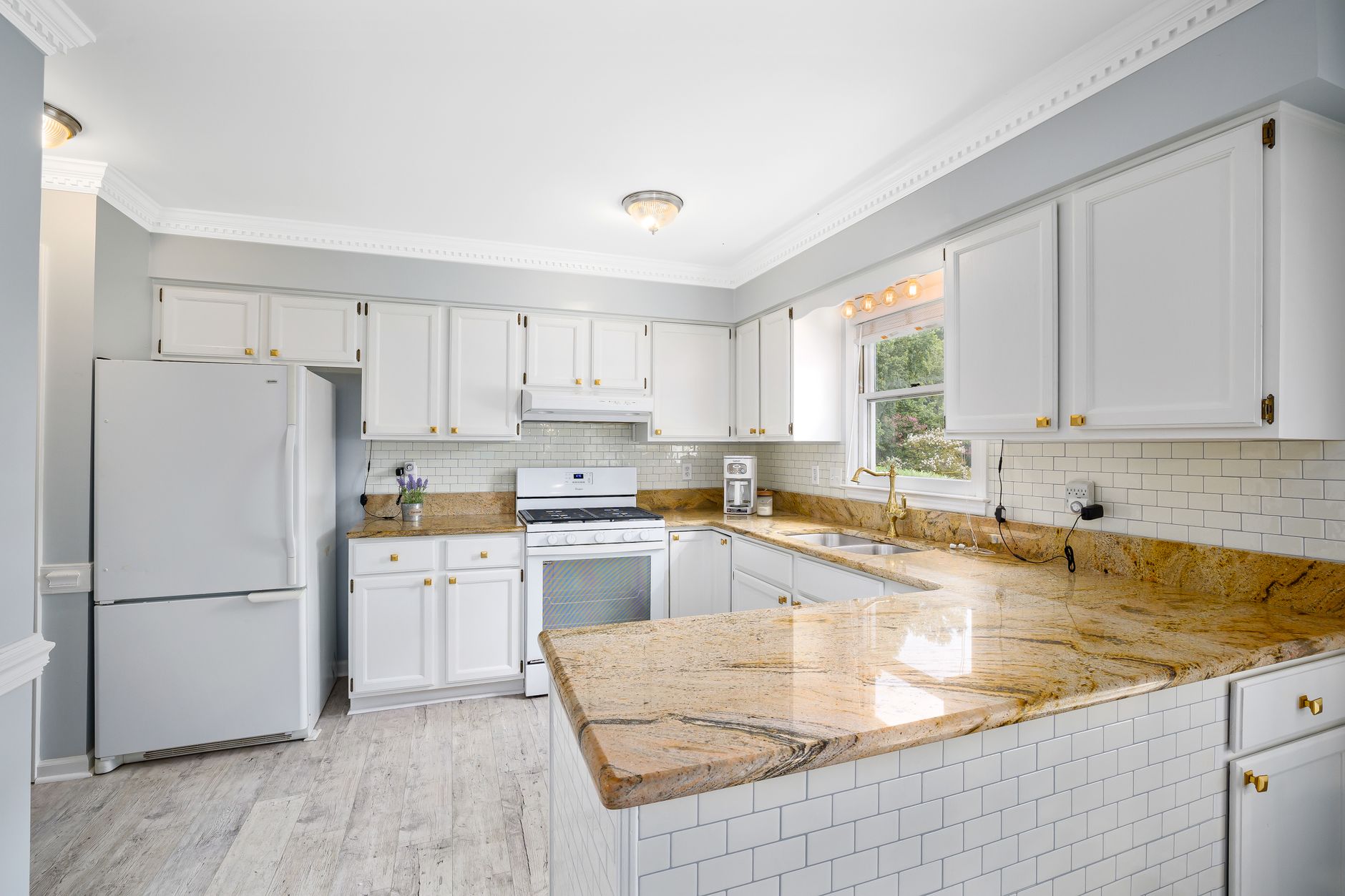
Of everything that goes into a new kitchen, the range hood is the item most often chosen last, chosen on looks, and regretted first. Cabinets get weeks of attention. The thing that decides whether the house smells like last night's salmon at breakfast usually gets picked off a showroom wall in ten minutes because it matched the faucet.
That is a shame, because ventilation is the only part of a kitchen that is a system rather than an object. A hood is one component of it. The duct is another, the termination outside is another, and in a modern airtight house the path the replacement air takes into the room is another still. Get any one of them wrong and the other three cannot compensate.
It is also the part that is close to impossible to fix afterwards. A countertop can be replaced. A cabinet door can be refinished. A duct in the wrong place, at the wrong diameter, with four elbows in it, is inside a finished wall or ceiling. So this belongs in the first conversation about kitchen remodeling in bellevue rather than in the appliance order at the end, and the reason is purely practical: the duct route has to be decided before anything closes up.
A hood captures, it does not suck
The mental model most people carry is a vacuum cleaner. Turn it up, and it pulls more smoke out of the room. That is not how it behaves.
Cooking plume rises on its own. It is hot, it is buoyant, and it arrives at the ceiling whether a hood is running or not. The job of the hood is to be in the way of it: to sit above the cooking surface, hold the rising column long enough for the blower to move it into the duct, and not let it roll out around the edges. An undersized canopy running hard will still spill, because the plume is wider than the thing trying to catch it. A generous canopy on a modest blower often performs better in a real kitchen than the reverse.
Three physical dimensions matter more than the airflow number on the box.
Width. A hood the same width as the range is the bare minimum. Wider is genuinely better, by three inches on each side where the cabinet layout allows it, because the plume spreads as it rises and the front burners are the ones that spill.
Depth. A shallow hood over a deep range leaves the front burners effectively uncovered. The front of the range is where most searing and frying happens, so a hood that does not reach forward over it is working on the wrong half of the appliance.
Mounting height. Follow the manufacturer's specified range, which is usually somewhere between 24 and 36 inches above the cooking surface depending on fuel and model. Mount it higher than that for sightlines and capture falls away quickly. Mount it lower and a tall cook knocks their head into it every day, which is how hoods end up switched off permanently.
Sizing the blower without chasing the biggest number
Airflow is measured in cubic feet per minute. More is not automatically better, for three reasons that all show up after installation.
The first is noise. A blower pushing a large volume through an ordinary duct is loud, and a loud hood gets run on its lowest setting or not at all. The quietest arrangement is a remote or inline blower, mounted in the attic or on an exterior wall rather than in the canopy above your head. It costs more and it needs somewhere to live, but it changes the appliance from one you tolerate into one you actually use.
The second is make-up air, covered below, because crossing a certain exhaust rate changes the scope of the job.
The third is that the real constraint is usually the duct, not the motor. A blower rated for a high flow on a test bench produces much less through a long run with several bends and a restrictive cap on the outside. Buying a bigger motor to overcome a poor duct route mostly buys noise.
Match the hood to the cooking, not to the kitchen's square footage. A high output gas range with a griddle genuinely needs serious extraction. A standard four burner electric or induction range used for ordinary weeknight cooking does not, and induction in particular produces no combustion byproducts at all, so the only things being removed are steam, grease and smell.
The duct is the part that decides performance
Everything above is undone by a bad duct run, and this is the half that becomes invisible once drywall goes on.
Shortest practical route, largest practical diameter, fewest bends. That is close to the whole rule. Each elbow costs flow equivalent to several feet of straight pipe, so a run that doglegs around a joist twice is quietly worse than a longer straight one.
Rigid smooth wall metal duct, sized to the hood manufacturer's requirement. Never flexible corrugated duct for a range hood: the ribbed interior is both a flow restriction and a grease trap. Never reduce the diameter to squeeze between framing members, which is the most common field compromise and the one that cripples an expensive appliance.
The outside termination matters as much as the pipe. It needs a proper hood cap with a damper that opens under pressure and closes when the fan stops, and it must not be screened with fine insect mesh, which clogs with grease and chokes the system within a year.
Two climate specific details are worth naming. In an unconditioned attic, warm moist kitchen air moving through cold metal duct condenses, so insulating the run prevents water tracking back down to the hood. And a termination on a wet, weather facing elevation wants a cap designed to shed driving rain rather than the cheapest round louvre in the catalogue.
Make-up air, and why tight houses forced the issue
Older houses leaked. Pull 600 cubic feet per minute out of one and roughly the same volume seeped in around windows, doors and framing without anybody noticing.
Newer construction, including a great deal of the housing stock around Bellevue built or substantially upgraded in the last couple of decades, is sealed deliberately well. Air barriers, better windows and taped sheathing make a house comfortable and cheap to heat. They also mean a powerful exhaust fan has nowhere to draw replacement air from, so it depressurises the building instead.
That has consequences beyond a hood that underperforms. In a depressurised house, air can be pulled backwards down the flue of any naturally vented combustion appliance, which is a safety issue rather than a comfort one. It also makes doors hard to open and whistles air through every remaining gap.
The standard answer is a make-up air system: a damper and a duct that open when the hood runs and deliberately bring outside air in. Most jurisdictions require one above a threshold exhaust rate, and a figure around 400 cubic feet per minute is a common trigger point, but the number and the details are set by the adopted code and any local amendments, so confirm your specific scope with the building department rather than relying on a general article.
What to understand before choosing a hood is simply that crossing that line adds a second duct, a damper, a control interlock and, often, some way of tempering incoming winter air so the kitchen does not get a cold draught every time the fan starts. None of it is exotic. All of it is cheaper to plan than to retrofit, and it is a real argument for a moderate, well ducted, quiet hood over a very large one.
When a recirculating hood is the honest answer
Ducting outside is not always possible. In a stacked condominium, an interior unit with no exterior wall nearby, or a situation where the association will not permit a new penetration, the alternative is a recirculating hood with charcoal filters.
Be clear about what that is and is not. It filters grease, it reduces odour, and it returns the air to the room. It removes no heat, no steam and no moisture, which means the humidity and the warmth stay in the kitchen. Charcoal filters are consumables with a service life measured in months of real cooking, and a recirculating hood whose filters were last changed three years ago is a decorative light fixture.
If that is the constraint, lean into mitigation: an induction cooktop rather than gas, a bathroom or utility exhaust nearby that can run during heavy cooking, and realistic expectations about frying.
Downdrafts, over range microwaves and other compromises
A downdraft unit that rises behind the cooktop asks the fan to fight buoyancy, because the plume wants to go up while the appliance pulls it sideways and down. They work best with short items on the back burners and least well with a tall stockpot at the front.
An over range microwave combination unit is a space saving compromise and should be understood as one. The blower is small, the capture area is shallow, the unit sits high because the microwave has to be reachable, and many are installed in recirculating mode even where a duct exists. It is rarely the right call in a kitchen being rebuilt from scratch.
Getting it into the build at the right moment
Ventilation is a rough-in trade, which means it is decided early and installed in the middle.
The hood model has to be chosen before framing is closed, because the duct size, the duct location and any blocking for mounting all come from that specific appliance's installation instructions. A hood selected after drywall is a hood fitted to whatever duct happens to be there.
If the design includes a custom plaster or wood hood surround built by the cabinetmaker, the insert inside it is ordered at the same time as the cabinets, because the surround is built around its dimensions.
And the electrical for a remote blower, a make-up air damper and the interlock between them belongs in the kitchen's circuit plan, not as an afterthought once the panel work is finished.
Ask to see the ventilation shown on the plan: the hood model, the duct diameter, the route it takes, where it exits the building and what the cap looks like. A remodeler who can point at all five on a drawing has already thought about the part of the kitchen nobody photographs and everybody lives with.